1942-1945: The war years.
1942: “Mr Tanaka was Lord Mayor of Chiang Mai from 1942-1945.”1 The title, “Lord Mayor” was used in a 2005 local Chiang Mai magazine and was in error: the official in charge of Chiang Mai municipality is, and was, from before and during the war, นายกเทศมนตรี, which is translated simply as “mayor”. The position must be held by a Thai citizen and is filled through election.2 Thus Tanaka never was mayor nor lord mayor of Chiang Mai, as least in this legal sense; but perhaps he had been appointed as such through Japanese bureaucracy. For whatever reason, the title does seem to be in common use today by Japanese in Chiang Mai when talking about Tanaka; eg, note that the Japanese Consul used the term in an article with his by-line.
While not an official of Chiang Mai municipality during the war, Tanaka was noted for having assisted the Imperial Japanese Army (IJA) during its presence in Chiang Mai. One source limited Tanaka’s assistance for IJA and IJAAF components in Chiang Mai to just “food procurement”.3 However that would be inconsistent with his activities before the war, as already described.
That source also asserted that Tanaka had been required to join the IJA.3 Hatano said that he himself had been allowed a deferment as a Japanese expatriate.4 Neither joining up nor dealing with deferments seems likely, with age the determining factor for both in 1941: Tanaka at 66 and his son-in-law at 41 were simply too old. No doubt, Tanaka, who had been active in sports, maintained a physical fitness which allowed him to work closely with the IJA in the field throughout the war, but that would not have entailed actually joining the army. And Hatano was unlikely to have been eligible for conscription (though, as Japan’s war losses grew, the age range draft was broadly extended, but not in Thailand).5 Hatano said that his participation in the war effort was limited to serving as a translator between the IJA and Thai labor who were improving Chiang Mai’s airstrip.4
On 12 March 1942, the 2nd Railway Command Group chose the Kanchanburi-Thanbyuzayat route for what later became known as the Thai-Burma Death Railway. Prior to that date, the group had evaluated several alternate routes including extending the railway from Chiang Mai to Toungoo. The speed with which the decision was made suggests that the route was not field checked; but rather relied on an earlier British survey.6 Tanaka was unlikely to have been consulted about the matter.7
On 24 March 1942, Tanaka would have witnessed the first air attack on Chiang Mai. It evolved in two stages, first an early morning strafing of the railway station by Flying Tiger P-40s which overflew his shop, and second, only a few minutes later, a strafing of the airfield by more P-40s. In the latter case, while the field itself would have been obscured by the many tall trees in Chiang Mai, Tanaka would have been able to see the aircraft making their strafing runs:8

1943: The IJA’s Southern Expeditionary Army Group had found early in the war that supplying its forces in Burma by sea was too vulnerable to attack by Allied submarines. The group’s solution was to reduce that exposure by establishing land routes between Thailand and Burma. By early 1943, the Thai-Burma9 and the Kra10 railways were in various stages of construction to alleviate that supply route problem.
To yet further secure supply access to Burma, the army group wanted also to set up a vehicle route through the north of Thailand.11 Three potential routes were reconnoitered:12
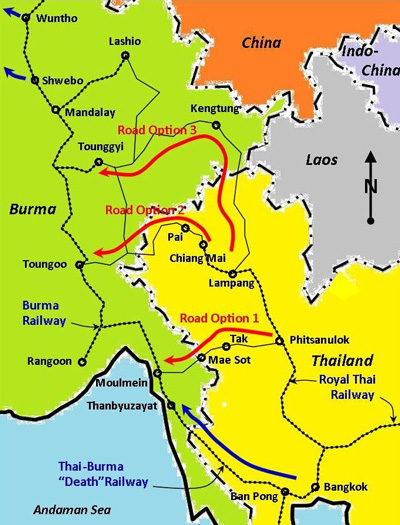
Road Option 2 in the map above is believed to have been what Tanaka and Colonel Tsuneoka had investigated during the colonel’s visit in 1930. And for which Tanaka had performed a terrain survey starting in 1933. Hatano consistently referred to this road as the “Chiang Mai-Mae Hong Son Road”; never the “Chiang Mai-Toungoo Road”.13 However, Japan’s official military history only called it the latter.14 In reevaluating the route in 1943, Tanaka would have been an invaluable asset, and in August, “his” road, Option 2, was approved for construction / improvement.
Also in January 1943, the Southern Expeditionary Army Group had put IJA Lt Gen Aketo Nakamura [中村 明人] in charge of the Siam Garrison, headquartered in Bangkok.15 In late March-early April,16 the general visited the Phayap Army Headquarters in Chiang Mai. The visit included a “photo op” at the railway station.17 From left to right (more information about people in group photo below in Appendix):
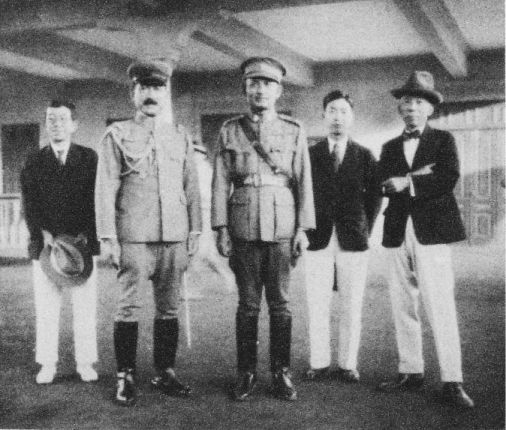 1. Chiang Mai Consul, Chichiro Harada
2. Lt Gen Aketo Nakamura, Siam Garrison, headquartered in Bangkok
3. Col Phraya Mahanarongruengdej (Plaek Julakan), Commander, Thai 13th Infantry Regiment, in Chiang Mai
4. Shu Hatano (Tanaka’s son-in-law)
5. M Tanaka
This photo could be assumed to clearly evidence the high esteem with which the military power structure regarded Tanaka and his son-in-law, Hatano. And that can be assumed to have been earned by providing material assistance to the military. Or it might have indicated Tanaka occupied an unnamed position in the Japanese power structure in Chiang Mai.
On 12 August 1943, the IJA’s Burma Area Army was ordered to prepare for the invasion of India via Imphal and Kohima. Within that army, the 15th Division was designated to construct / improve the Chiang Mai-Toungoo Road18 and thereafter the division was to use it to go to Toungoo, and from there on to Imphal. The 15th Division at that point was in process of moving in increments from Shanghai19 to Thailand and those units which had arrived, the advance units, were assigned to road construction.20 The work had to be completed in two months, ie, by mid-October 1943,21 so that the 15th Division could be in place for the attack on Imphal, planned for 11 February 1944.22 Since Tanaka was intimately familiar with the route, he probably would have been directly involved, at the least as an adviser, in this effort.
While it was almost immediately apparent that the road could never be finished by mid-October,23 higher command was adamant in continuing the not-yet-completed road work past that date in hopes of finishing it. Finally, on 09 November, the command relented and agreed that the 15th Division could use the existing Lampang-Kengtung-Takaw Road to move to the Imphal area.24 However, approximately a third of the 15th Division was retained to continue constructing the road (and to perform other duties).25 And Tanaka’s presence would have continued to be required on the extended project effort into 1945.26
21 December 1943: Tanaka might have been witness to the worst bombing Chiang Mai endured during the war. Allied aerial recon photos had recorded the 15th Division troops who were withdrawing from road construction to concentrate at the Chiang Mai railway station for transport to Lampang.27 No doubt believing the troops were preparing an aggressive move, and that the Chiang Mai railway station was central to that effort, 29 B-24s bombed the rail station on 21 December 1943,28 killing around 300 people.29 However, the last of the 15th Division units going to Imphal had left Chiang Mai on 18 Dec 1943;30 so the death toll of 300 from the Allied bombing was almost entirely Thai civilians. Bob Bergin identified the 300 dead as Thais, implying that IJA troops had successfully completed their withdrawal south to Lampang.31
1944: Two sources described Tanaka as leading IJA troops to “Burma”,3 or “Imphal”.32 There are problems with these statements. As noted above, IJA troops, the 15th Division, did not advance into Burma via the Mae Hong Son Road — the construction of which Tanaka was helping oversee; instead the 15th Division used the older, traditional route via Mae Sai to Kengtung, Takaw, and Meiktila. Further, Tanaka would probably have been receiving direction from General Nakamura, whose Siam Garrison was part of the Southern Expeditionary Army Group, which was directly overseeing the construction of the road, not the invasion of Imphal.33 Thus, Tanaka would probably have continued overseeing construction of the road accessing Toungoo. It was eventually completed in July 1944,34 after the IJA had been defeated at Imphal. It would later provide an avenue of retreat (one of many) for IJA troops devastated from a series of disastrous defeats starting with and continuing after those at Imphal and Kohima.35 The large number of IJA troops who died on the road from wounds, malnutrition, and disease, with their bodies left where they had died, led to alternate names for the Toungoo-Chiang Mai Road, such as Skeleton Road and Road of Bones, etc.36
1945: Most of the alternate routes of retreat out of Burma led into Thailand with objective, Chiang Mai. Because of the large number of border crossings available, many existing roads were followed within Thailand, including Tanaka’s. One such road, the Southern Route, went through Mae Sariang to Chom Thong and on to Chiang Mai:37
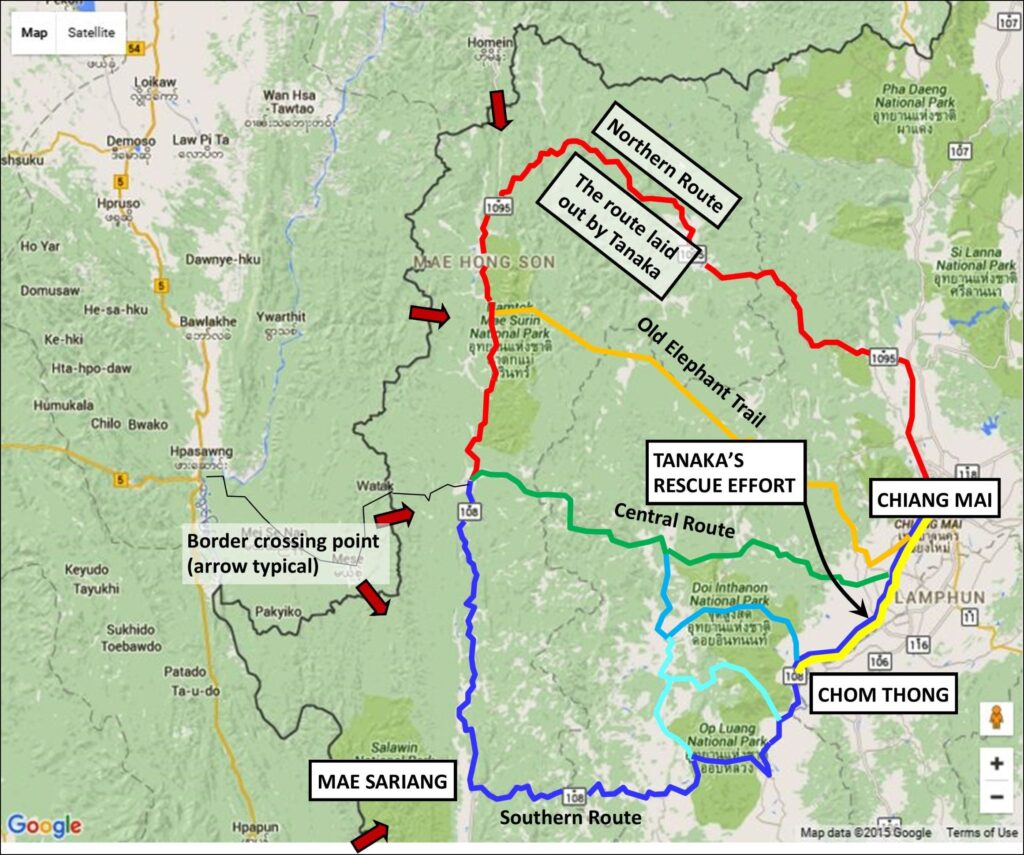
When the district chief at Chom Thong saw the many desperately ill and wounded Japanese troops streaming through his town, he got word to Tanaka, whom he knew. Tanaka responded by commandeering a vehicle fueled by wood gas and driving to Chom Thong two or three times to ferry back the most afflicted to medical facilities in Chiang Mai.38 It is ironic that Tanaka ran this rescue effort over a road other than the one he had helped construct; nonetheless “his” road was the one that most retreating IJA troops followed to Chiang Mai.
A retired military intelligence officer, nominally the former military attache for the second class secretary at the Japanese consulate in Chiang Mai, reminisced about his assignment in Thailand, and summarized his view of both Tanaka and Hatano: “Those two both cooperated really well with the army”.39
October 1945: In an apparent sweep of all Japanese Nationals in Thailand after the war, both Shu Hatano and Tanaka were detained by Allied forces and sent to Bang Bua Thong internment camp40 (Google Maps link) to arrive on 20 October 1945. They stayed with other Japanese, almost all of whom elected to return to Japan. But Tanaka and Hatano opted to stay. Tanaka confided to Hatano his fear that he would be tried for war crimes should he return to Japan.41 Tanaka told a military acquaintance at the end of the war that he could not leave Chiang Mai (to return to Japan), perhaps implying a responsibility he felt towards his family in Chiang Mai.42
1946: Tanaka and Hatano were released 21 November 1946 from the internment camp. Tanaka was 71.43
Tanaka reopened the photo shop on the Ping River, with a new name, “Chiang Mai Photo Shop” and turned it over to Kumpoon and Hatano to operate.44
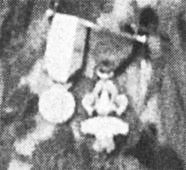 Following the war, Boonserm Satrabhaya lamented that no medal or remuneration could have been provided Tanaka for his loyal and substantive service to a defeated nation.45 Apparently unaware of that observation, Matsumoto included in his book a photo of Tanaka in Laotian clothing, dated “immediately after the war”, wearing on his chest what were called Japanese medals:46 However, the more distinctively shaped of the two medals (that on the right) has been identified as Laotian and registers which still exist do not record its issue to Tanaka.47 While the photo was dated “immediately after the war”, it would necessarily have been some time after Tanaka’s return from the internment camp in October 1946. Later it was found that Boonserm had also erred: Tanaka had been given recognition by the Japanese government for his assistance during the war. Oyama Hachisaburo, a long-time acquaintance, asserted that one evening long after the war, while drinking with Tanaka at the Sri Pakard Hotel overlooking the Ping River in Chiang Mai, Tanaka had shown him a Japanese government commendation (presumably signed by the Emperor) which he (Tanaka) had then dramatically torn into small pieces and thrown in the Ping River.48
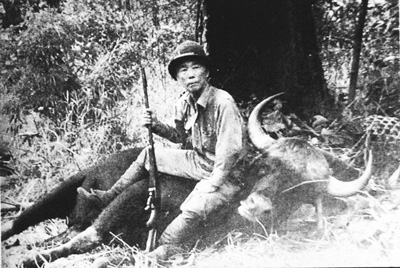 Following the turnover of his shop to Kumpoon and Hatano, Tanaka in his semi-retirement made numerous trips on “his” road to Mae Hong Son where he offered his photo services, as before the war. Those trips were expeditions with horses and porters carrying photo gear and luggage.49 During those trips, he would indulge his love of hunting; there is a photo of Tanaka sitting astride a wild buffalo he had shot on one of those trips. It is dated 1955 — he would have been an active 80 years old:50
Since it was an annual event, Tanaka eventually kept his photo equipment there in Mae Hong Son. When he finally had to give up those annual jaunts, the photo gear was not retrieved and its fate is unknown.44 It should be noted here that Tanaka never used any other than a view camera with glass plate negatives.51 The view camera was cumbersome, but it produced photos vastly superior in quality to that of the more portable types of cameras, starting with the Kodak Brownie box camera in 1900 and evolving into the first commercially viable compact single lens reflexes in the mid-1930s.
Hatano described Tanaka as someone who had been involved with (Japanese) intelligence — with old habits hard to break: this while recalling Tanaka seated close to a barely audible shortwave radio, ear almost touching it, listening to news about the situation in Dien Bien Phu, which was then under siege in 1954.52
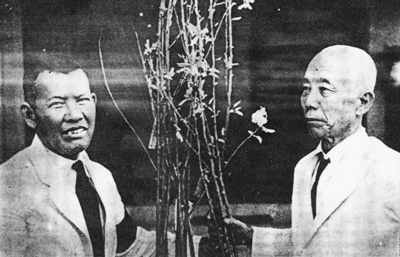 Long after the war ended and before his death in 1961, Tanaka, a continuing resident of Chiang Mai, presented the mayor of Chiang Mai, with cherry tree saplings given by the people and government of Japan in appreciation for the support that Thailand had given Japan during the war:53 The people and government of Japan having used Tanaka to present the trees perhaps ten years after the end of the war again raises a perplexing question as to what more formal, but unnamed, function Tanaka might have held in Japan’s hierarchy.
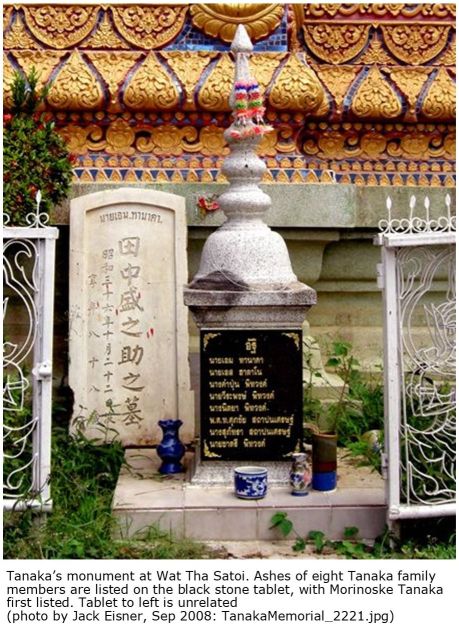
Tanaka died on 22 October 1961 at age 86.54 A tomb marker was erected at Wat Tha Satoi, only half a kilometer from where his shop had been located.55 His age at death on his memorial at the wat reads 88, which is in error.56) Hatano before dying thirty years later asked that his ashes be placed next to Tanaka’s.57
Aftermath
As noted at the beginning, Tanaka is currently remembered for his significant contribution to the photographic imagery of the Chiang Mai area in the early 20th century. But he must also be remembered for having established the routing of present-day Thai Rte 1095 between Mae Malai and Mae Hong Son, The Road of a Thousand Curves,58 and for having fostered friendly relations between the IJA and the Thai populace in northwest Thailand during the war.59
Matsumoto describes Tanaka as having been permanently scarred by his involvement in the disastrous defeat at Imphal and his neglect of his other family in Japan.60 If true, it would certainly have been a demonstration that Tanaka was not a cold blooded, heartless agent of the state.
With regard to his contribution to the defeat at Imphal, Tanaka presumably had explored his proposed route to Toungoo with Col Tsuneoka in 1930 (though there is no record of what Tanaka actually showed the colonel) and the colonel had apparently given it his endorsement, for Tanaka began a terrain survey for it in 1933. A military command reviewed his proposal plus two alternative routes in 1943, thirteen years later. In any case, it was a command decision in 1943, not Tanaka’s, that chose his Chiang Mai-Mae Hong Son-Toungoo routing. If the information Tanaka provided had been inadequate or misleading, the command was at fault for having profoundly understaffed the field work for a route of approximately 350 km. Nor could Tanaka be blamed for equipping road construction crews with only shovels and hoes.61 The Allied effort in constructing the Ledo Road of approximately 735 km through somewhat similar terrain with 50,000 workers equipped with modern highway construction machinery and supplied with prefabricated bridges and buildings, contrasts the appallingly poor quality of planning and construction support provided by Japan’s military staff. That the 350 km Chiang Mai-Toungoo Road was eventually completed to a specified four meter width by July 194462 is a testimony to a tenacity and innovative spirit in the 15th Division plus the Thais who were recruited and paid for their work.63
With regard to Tanaka’s apparent neglect of his family in Japan, that was rather a personal sacrifice he had consciously made to serve his country. While Matsumoto condemned Tanaka for his failure to return to Japan, he also acknowledged that other Japanese had responded to a similar motivation.64 He had been led to believe that Japan would prevail in this conflict. Had that occurred, and he was seen to have played a part in it, perhaps he might have felt he would be forgiven by his family in Japan. But he wasn’t aware, nor were 70 odd million other Japanese65 of the profound shortsightedness of their country’s leaders. Or, to put it more simply, the multi-talented Tanaka had the misfortune of having been on the losing side.42
APPENDIX
Information about the people in group photo above
Chiang Mai Consul, Chichiro Harada: Army Service Forces Manila M 354-18E Civil Affairs Handbook Japan (offsite link) Section 18E: Japanese Administration Over Occupied Areas – Thailand, p 8. No additional information available.
Colonel Phraya Mahanarongruengdej [พระยามหาณรงด์เรืองเดช] (Plaek Julakan), a partial list of accomplishments:66
1926: As a Lt Col in the 17th Infantry Regiment at Fort Surasakmontri (Lampang), he built Ban Pong Nak, “the house with many windows”, to house King Phrajadhipok and Queen Rambhaibhanee during their visit which began in Jan 1927 (The structure was used for another Royal Visit in 1958 and is currently used as a local museum).
1931: Commander of the 2nd Infantry Regiment – Royal Guard (now the 11th Infantry Regiment – Royal Guard).
1932: The regiment was dissolved into the 4th, 5th, and 6th Infantry Battalions.
1932: The 8th Infantry Regiment (the Chiang Mai Regiment) was downgraded to become the 14th Infantry Battalion.
1936: The 14th Infantry Battalion became the 31st Infantry Battalion after economic recovery allowed army expansion.
1942: The Chiang Mai Regiment, as the 31st Infantry Battalion, was upgraded to the 13th Infantry Regiment of the 4th Division which consisted of:
-
- The 3rd Infantry Regiment (including the 4th, 6th, and 8th Infantry Battalions) – headed by Col Luang Kriangdejphichai (Sut Sukhanin).
- The 13th Infantry Regiment (including the 30th, 31st, and 34th Infantry Battalions) – initially headed by Lt Col Khun Watanayothin (Sord Ratanayantrakarn), then transferred to Col Phraya Mahanarongruengdej (Plaek Julakan). This was his position when photographed above.
1946: The 13th Infantry Regiment was retitled as the 14th Infantry Regiment.
1950: The 14th Infantry Regiment was renamed as the 7th Infantry Regiment.
Lt General Aketo Nakamura [中村 明人]:67
Participated in Japanese invasion of French Indochina in 1940 as head of the IJA 5th Division.
04 January 1943: Appointed General Officer in Thailand, initially called the Siam Garrison Command — this was his position when photographed above. Prime Minister Hideki Tojo had appointed him because of his ability to understand the Thai perspective and his affable personality, this to deal with the fallout of the Ban Pong incident (offsite link) on 18 December 1942 where a Japanese soldier striking a Thai monk had resulted in Thais killing four Japanese soldiers and injuring of two others. Nakamura’s diplomacy successfully resolved this difficulty and, during his tenure, Thai-Japanese relations significantly improved.
20 Dec 1944: Appointed Commander, the Japanese Thirty-Ninth Army (offsite link), which was a renaming of the Siam Garrison Command.
14 July 1945: Appointed Commander, the 18th Area Army (offsite link), which was a renaming of the Thirty-Ninth Army.
At the end of the war, he surrendered his troops to the Allies.
Last Updated on 21 February 2026
- Sakamoto, Isao, (Japanese Consul in Chiang Mai), “10 years ago this month”, in Citylife, Chiang Mai, 10 Oct 2005 (offsite link no longer available) [↩]
- Kittichaii Wattananikorn email of 09:34 05 Nov 2025[↩]
- Boonserm, p 53.[↩][↩][↩]
- Matsumoto, p 86.[↩][↩]
- Reference needed.[↩]
- Burma Railway: History (offsite link) [↩]
- Tamayama, Kazuo, Railwaymen in the War (New York: Palgrave Macmillan, 2005) pp 7-8.[↩]
- Extract from photo in Payap Collection, no. 359 (v4 p 31), dated 1953, by Boonserm. Details of the attack are at Ford, Daniel, Flying Tigers (Washington: Smithsonian, 2007), pp 243 ff. My ref: \02200 Chiang Mai city\Tanaka\Photo shop\Rear vw T’s hse w studio.jpg (trimmed) [↩]
- Preliminary work for construction began in May 1942 (Wikipedia: Burma Railway, offsite link).[↩]
- Construction began in Spring 1943 (Senshi Sosho v15, p 142) [↩]
- Senshi Sosho v15, p 140. [↩]
- Map by author using Microsoft Publisher, modeled on map in Senshi Sosho v15, p 141; my ref: \02300 Route CHOICES\02301 Summary maps\1943 route choices-colored\_MASTER Route choice map.pub: choice mapa.jpg.[↩]
- Matsumoto, p 219-220.[↩]
- Senshi Sosho v15, pp 140-148, 180.[↩]
- Nakamura, who had served under Japanese PM Tojo in Manchukuo, was chosen for his diplomatic skills specifically to deal with the Ban Pong Incident (Reynolds, ibid, p 234).[↩]
- Wisarut Bholsithi was able to narrow the date range per a Thai translation of a memoir by General Nakamura in which he notes a meeting with the Phayap Army in Chiang Mai, probably at Fort Kawila (Wisarut Bholsithi email of 0018 20 Sep 2015); however, Reynolds, ibid, p 72, states, “General Nakamura visited the region in mid-December, leaving Chiangmai just ahead of a devastating attack on the city’s rail facilities on 21 December.“.[↩]
- which was displayed at the Boonserm Satrabhaya Historical Photo Exhibit at the Sriprakard Hotel in February 2011.[↩]
- Senshi Sosho v15, p 146.[↩]
- Senshi Sosho v15, p 183.[↩]
- Senshi Sosho v15, p 140.[↩]
- Senshi Sosho v15, p 179.[↩]
- Later delayed to 15 Mar 1944 (Senshi Sosho v15, p 181). [↩]
- Senshi Sosho v15, pp 179-180.[↩]
- Senshi Sosho v15, p 180.[↩]
- Senshi Sosho v15, p 180. [↩]
- (see below) [↩]
- A reference would be useful, however there are large gaps in records currently available for aerial recon flights and intel reports. The bombing itself can be used as evidence.[↩]
- Hammel, Eric, Air War Pacific Chronology (Pacifica CA: Pacifica Military History, 1998) (e-book), location: 8902.[↩]
- 2bangkok Forum: Wisarut 30-10-08, 02:40 PM (message and URL lost when website was destroyed by hackers a few years ago over some comment about Myanmar; unfortunately they destroyed unique historical information that would have been of use to their own country’s historians. The website shared in the blame because it didn’t keep complete backups).[↩]
- Senshi Sosho v15, p 181[↩]
- Bob Bergin, “The Youngest Operative: A Tale of Initiative Behind Enemy Lines During WWII”, Studies in Intelligence, 52:3, p 26: offline link no longer available.[↩]
- Matsumoto, p 25.[↩]
- The invasion was assigned by Southern Expeditionary Army Group to the Burma Army Group’s 15th Army (Senshi Sosho v15, pp 144, 177).[↩]
- รายงาน การ สําร จอขุดค้น ตาม โครงการ คึกษาเชิงอนรักษ์แหล่งฝังศพทหารญี่บุน สมัย สงครามโลกครั้งที่ 2 จังหวัดแม่ฮ่องสอน หัางหุ้นส่วนจํากัดเฌอกรีน (Report on Archaeological Research for the Japanese Soldiers Burial Project World War II Era – Mae Hong Son Province (Chiang Mai: Green Tree, LLP, Ltd, submitted by / for Mae Hong Son Province Archaeology & National Museum Office 6, Chiang Mai, 1999) [hereafter Burial Project], pp 43, 81.[↩]
- Matsumoto, p 75: one amongst many sources.[↩]
- Matsumoto, p 74. Actually that sort of name was applied to many roads along which IJA troops died during the retreat. For example, the “Bleached White Bone Highway” in Hayase Shinzo, Japanese in Modern Philippine History (offsite link no longer available), WIAPS Research Series No. 5 (Tokyo: Waseda University, 2014), p 197.[↩]
- Map image: Nations Online: Thailand (offsite link). Annotated by author using Microsoft Publisher. My ref: \02200 Chiang Mai city\Tanaka\Maps\Alternate rtes.pub: \Alternate rtes anno2.jpg[↩]
- Matsumoto, p 75; Shu Hatano memoire (unpublished), p 7; the latter provided by David Boggett (offsite link) email 22:04 17 Dec 2018; my ref: \02200 Chiang Mai city\Tanaka\Hatano booklet\Hatano Shu 01-07 Jap-Engl-2025 xlatn.rtf, also \03400 Boggett, Japan’s Burma Road\SETO era matl\9-Hatano Shu\Hatano Shu ALL.docx [↩]
- 吉永誠三郎: 「お二人とも、(日本)軍には、本当によく協力下さいました」, Matsumoto, p 226.[↩]
- Three camps were located in the area along the north side of the Phra Phimon Khlong:
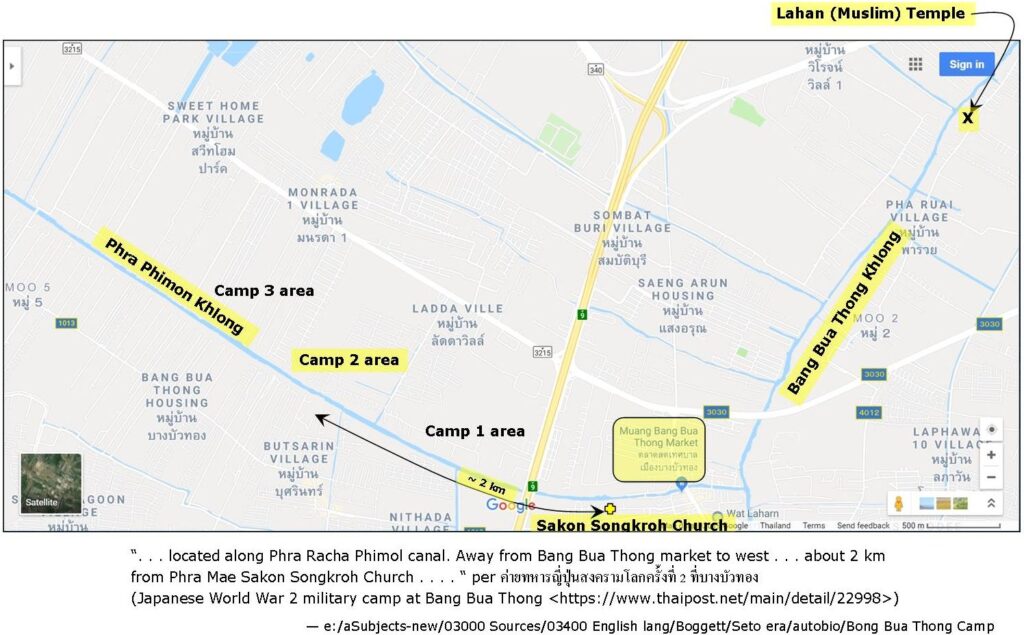
For more information on the camps, see ค่ายทหารญี่ปุ่นสงครามโลกครั้งที่ 2 ที่บางบัวทอง (offsite link in Thai); my ref: \03400 Boggett, Japan’s Burma Road\SETO era matl\0 Seto autobio\Ban Bua Thong Camp\soi20 art xlatd.docx[↩]
- Matsumoto, p 200. To have been charged with war crimes, Tanaka would have had to have been involved in far more serious activities than are presently ascribed to him; more likely, he simply overestimated the ferocity of the Allied justice system.[↩]
- Matsumoto, p 200.[↩][↩]
- Matsumoto, pp 199, 229.[↩]
- Boonserm, p 50.[↩][↩]
- Boonserm, p 52.[↩]
- Matsumoto, pp 30, 85; image my ref: \02200 Chiang Mai city\Tanaka\18950000 Sino-Jap War 1895-6\Medal1.jpg[↩]
- OMSA: Medal identification (offsite link, access requires a delayed registration). Information about this medal indicates that its attractiveness resulted in many forgeries being struck. Tanaka is recorded as having worn Laotian or Vietnamese clothing, with medals, to a costume party in Chiang Mai (Matsumoto, p 33). Tanaka made no attempt to deceive; subsequent viewers deceived themselves by assuming the medals were Japanese.[↩]
- David Boggett email 13:05 04 Nov 2025[↩]
- Boonserm, pp 50, 52.[↩]
- Displayed at exhibit in Wat Muen San, CIMG4942 of 23 Sep 2009.[↩]
- Boonserm, in discussion, 11 Aug 2015, at his home. He also had one of Tanaka’s wooden plate holders for his view camera, and several glass negatives, 4″x 5″ and 5″x 8″.[↩]
- Matsumoto, p 202.[↩]
- Photo displayed in Wat Gate Museum. The original caption noted that Luang Sriprakard, on the left, was uncle of Boonserm Satrabhaya, who at the time of this photo, would have been a local newspaper photographer: later he would become the “unofficial historian of Chiang Mai”. The photo is undated and Boonserm didn’t recall when it occurred. The English-language caption referred to Sriprakard as “lord mayor”. His title in Thai was นายกเทศมนตรี, which is translated simply as “mayor”: that embellished translation / mistranslation may have been the source of the 2005 magazine article use of the term as noted above. It occurs nowhere else. My ref: \02200 Chiang Mai city\Tanaka\Tanaka\Tanaka & cherry tree-b.jpg[↩]
- Matsumoto, p 229.[↩]
- Matsumoto, p 211; my ref: \02200 Chiang Mai city\Tanaka\Tomb\Tanaka gravestone anno.pub: Tanaka gravestone anno1.jpg[↩]
- His cemetery marker at Wat Tha Satoi in Chiang Mai reads 1873, which is in error. (Matsumoto, pp 89, 118, 229[↩]
- Matsumoto, p 215.[↩]
- actually more than 2,200 (Thaiways: Mae Hong Son, the City of Three Mists, offsite link) [↩]
- Reference needed. Also add content to main text.[↩]
- Matsumoto, p 216.[↩]
- 350 km: (see above); shovels and hoes: Matsumoto, p 75[↩]
- Burial Project, pp 43, 81.[↩]
- Construction was the result of a cooperative effort between the IJA and Thai laborers, the latter paid by the Thai government (Burial Project: numerous locations).[↩]
- Matsumoto, pp 200-201.[↩]
- Wikipedia: Demographics of Japan (offsite link).[↩]
- Wisarut Bholsithi email of 0520 17 Sep 2015.[↩]
- Wikipedia: Aketo Nakamura (offsite link) [↩]