05 Mar 1944: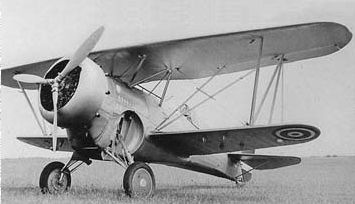 At Chiang Mai Airfield (which was being used primarily by the IJAAF), an RTAF Curtiss Hawk III, plus five Kawasaki Ki-48 Type 99 twin-engined light bombers (Alled reporting name: “Lily”)1 and an unidentified IJAAF transport were destroyed on the ground by parafrag bombs dropped by eight B-25s of the USAAF 22nd and 491st (Medium) Bomb Squadrons. The squadrons flew out of Yangkai2 (Google Maps link), about 60km NNE of Kunming3 (Google Maps link to Wujiaba Airport), China, and about 800 km north of Chiang Mai (See 05 Mar 1944: B-25C for information from the Allied side.
References: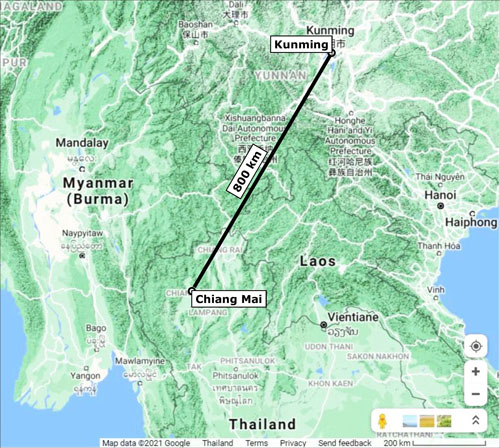
- ประว้ติกองท้พอากาส ในสงครามมหาเอเชียบูรพา ระหว่าง พ.ศ.-๒๔๘๔-๒๔๘๘ (นครราชสีมา: สมบูรณ์การพิมพ์, พ.ศ.๒๕๖๔) [History of the Royal Thai Air Force during the Great East Asia War, 1941-1945 (Nakhon Ratchasima: Somboon Printing, 2021); hereafter, RTAF History 2021], p 180 (translated):
05 March 1944
Time 1810-1840 hrs. Eight USAAF 341st Bombardment Group North American B‑25H/J Mitchell medium bombers from two squadrons and armed as noted,
-
-
- 22nd : five (12 para-frag bombs each)
- 491st: three (11 para-frag bombs each)
-
attacked Chiang Mai Airfield at a height of 150-200 feet releasing all bombs. In addition, the aircraft strafed the airfield and railway station with 75 mm machine guns and air cannons.
Results of the attack:
-
-
- Thai casualties: two soldiers seriously injured, four civilians killed, one seriously injured, and three less seriously; one RTAF 52nd Squadron aircraft [Curtiss Hawk III]2 burned; accommodation at the airfield and railway station, plus the railway station water tower seriously damaged; one house destroyed by fire, with seven more houses damaged.
- Japanese casualties: five light bombers [possibly Ki-48s from the 34th Sentai3], one transporter, and one building burned; five light bombers damaged by shrapnel.
- USAAF casualties: one USAAF aircraft lightly damaged, three heavily damaged, all by ground fire, with that of 2Lt Wendell H Hanson having to make an emergency landing at Kunming Airfield [~N24°59.6 E102°44.7]. One, 491st Squadron B-25H Mitchell medium bomber No. 43-4263, group leader of the squadron, was lost on the way back. The crew list was as follows:
-
- Captain George S Williams, Jr, pilot
- 1Lt John P Toler, navigator
- S/Sgt Harry A Mozian, mechanic
- T/Sgt Irving H Pelkey, radioman
- Sgt Allen G Zimmer, gunner/photographer
-
-
- Hiroshi Umemoto, Air War in Burma, vol 2 (Tokyo: Dai Nippon, 2002) [梅本弘,ビルマ航空戦・下 (東京:大日本印刷株, 2002)], p 495, lists only three entries covering Ki-48s, while the RTAF History 2021 counts five Ki-48s plus an IJAAF transport.
Note: See 05 Mar 1944: Ki-48 fighters destroyed on ground at Chiang Mai for details from the Japanese side and 05 Mar 1944: USAAF B-25C crashed near Kunming for details from the Allied side.
| First published on Internet | ||
Last Updated on 8 September 2026
- A USAAF pilot on the raid, Wendell Hanson, misidentified the twin engine bombers as “Bettys”, ie, Mitsubishi G4Ms. (Wendell H. Hanson, “Chiang Mai, Thailand”, Jay V. Percival, “My Recollection”, and John A. Johns, “More About the Chiang Mai Raid”, all in WWII Diary: Stories by the Airmen of the 22nd Bombs Squadron of World War II, edited by David K. Hayward (Reprint, Longbeach, CA: 22nd Bomb Squadron Association, 2014), pp 199-208, 209-210, and 219-220, respectively) [↩]
- Sakpinit Promthep email of 08:51 06 Feb 2021[↩]
- See aircraft and unit present on 05 Jun 1943 which were identified by Sinpachi: he indicated on ww2aircraft.net (offsite link) that the aircraft would have been a Ki‑48, a light bomber, in the 34th Sentai. It was the only unit with Ki-48s in the Chiang Mai area at that time. Christopher Shores, Bloody Shambles, Vol Three (London: Grub Street, 2005), p 426, confirms that the 34th Sentai, flying Ki-48s, was present on the Burma front from October 1942 to February 1944.[↩]