05-06 Oct 1944:1 Note that this loss was one of three by the RAF on this date for this mission, and individual details of the three have been sometimes difficult to differentiate. The three losses were BZ978, BZ992, and EV940.
A Liberator B.VI2 with the designation BZ978 was homebased with 159 Squadron at Digri Airfield (Google Maps link to airfield, located at center of map though not labeled):3
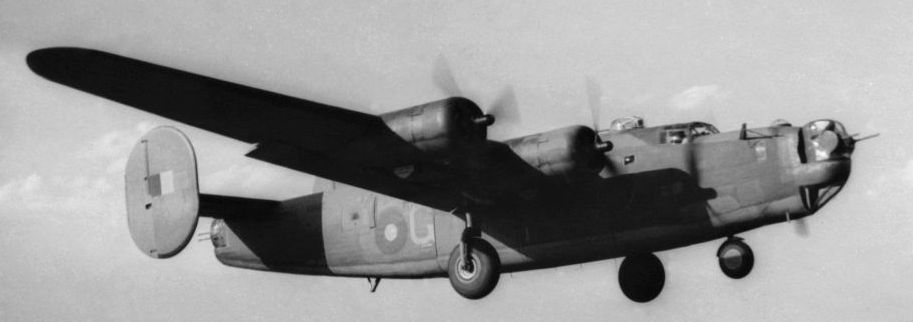
Thus, after taking off just before midnight on 05 Oct 1944, it flew from Digri in a 16 bomber raid on the Thai Railway’s Northern Line (between Bangkok and Chiang Mai). Possibly enemy ground fire during a low level attack on the Thai railway’s Northern Line (Bangkok-Chiang Mai) or a later encounter with an IJAAF Ki-43 damaged the B-24 and it failed to return to Digri. The map below depicts a possible route, in dashed red, that the damaged plane took as its crew attempted to reach Allied held territory, per sketchy details provided in the RAF Circumstantial Report (below):4

Five crewmembers were lost when it crashed in the north of the Bay of Bengal; three survived to be captured and sent to prison in Rangoon, where one soon died:
Survivors:5
F/Sgt Leslie John Roper (1338538): 2nd Pilot
Sgt Sidney Hill (1891770): Flight Engineer
Casualties:6
W/O John McKinnon (1550526): Captain
W/O Clive Symes Swan (A 416627): Navigator [Australian]
W/O Errol Percival Ford (A 420172): W/Op
Sgt John Arthur Nelson (A 423854): Beam Gunner [Australian]
F/Sgt William Noble Paterson (1345502): Upper Gunner
F/Sgt. Harry Frederick Richardson (R 184955): Tail Gunner [Canadian]
References:
• Allied Eastern Air Command Weekly Intelligence Summary, 13 Oct 1944:7
Section I. Resume of Daily Air Operations, p 7:
06 Oct – Two Liberators of 159 Squadron missing from low level attack on Bangkok-Chiengmai railway [one of those being BZ978].
Section I. Resume of Enemy Operations, p 7:
06 Oct: . . . Liberators making a dawn attack on the Bangkok-Chiengmai railway were intercepted by [single engine] fighters with fixed undercarriages, probably Nakajima 97 fighters [Ki-27s], which are known to be in use by the Siamese air force. One Liberator was shot down. Another which was attacked, frontally, near [Lopburi], claims hits on its assailant. . . .
Comment:
The Liberator described as “shot down” was probably BZ978; but the crash resulting from being “shot down” didn’t occur for several hours after being hit since the plane labored on with just two of its four engines intact carrying it back close to Chittagong before having to ditch in the Bay of Bengal.
It was a busy and confusing day. Regarding the reported encounter with a probable Ki-27 over Lopburi, Sakpinit Promthep notes that FS3 Chalor Buakaew of RTAF 43 Squadron, flying a Curtiss Hawk 75N, intercepted a formation of B-24s attacking Lopburi. After making some head-on passes at 500 feet above ground level, the Thai and the RAF separated without damage to either side. Sakpinit found support for this encounter in Chalor’s funeral book which noted that his military record included:8
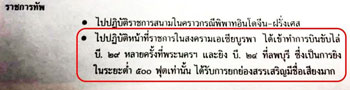
Translation:
In the Great East Asia war [WWII], I intercepted B-29s over Bangkok many times [verified at least once on 05 Jun 1944]. Over Lopburi, I dueled with a B-24 at an altitude of 500 feet, for which I was much praised and became famous.9
Regarding the 159 Squadron report which mistakenly identified a Curtiss Hawk 75N as a Ki-27: the two shared about the same wingspan, plus fixed landing gear. Dan Jackson points out that the misidentification was understandable: he would hardly have expected to encounter an enemy operating an American-made aircraft at that time and place.10
• Australian War Memorial (offsite link)
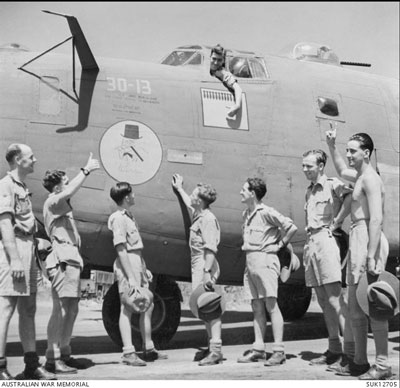
The Liberator “Winnie”, and its caricature of Mr Churchill, pictured with a previous crew headed by Flying Officer Ken Alcorn of Perth, WA, captain (in pilot’s seat), in August 1944.11 Matt Poole points out that, fourth from left in the photo is E Ford, apparently Errol Percival Ford, who as a “wireless operator” in this photo was “2nd pilot” on BZ978’s later, ill-fated flight and was one of those killed.12
• Captain Bantao Punsri, Royal Thai Army13

Translation:14
Later Allied aircraft were attacking bridges, especially the one at Ban Dara, on the railway to the north. I was put in charge of installing anti-aircraft guns on the train and at the foot of Ban Dara bridge. The one on the train had a tripod mount which made it difficult to swivel round; so I got permission to change the tripod stand to a monopod so that I could turn the gun round when I shot. It worked so well that I shot a B-24 down at Uttaradit, and the gun at Ban Dara shot down another B-24. We took two prisoners at Uttaradit and five from Ban Dara; 15 were killed. [page 69]
His wife added details:

Translation:14
Khun Bantao told me long ago that he had thought about how to improve a gun sight. He wanted it to be larger so that he could see a target more clearly: the one originally provided with the gun was a small square sight and he developed a larger oval one to replace it using rod from an umbrella frame. He told me about the number of prisoners and deaths from aircraft that had been shot down. He informed his commander in a telegram (which a kind soldier showed me so that I didn’t need to worry about my husband) that he suspected two more aircraft had been shot down because he saw them leaving the target trailing flames. He learned later that he was right: one had been shot down at the border and another went down in the sea. [page 71]
Comments:
•The two B-24s, EV940 (over Uttaradit) and BZ992 (over Ban Dara bridge) were clearly brought down by ground fire, presumably faciliated by Bantao’s innovation.
• The one that went down in the sea, BZ978, was also a possible victim (delayed) of ground fire, though not explained in messages from BZ978 before it ditched (Umemoto doesn’t commit to an identity for the “Shooter of BZ978,” leaving it to a Ki-43 or AA fire).
• The aircraft shot down at the border is an unknown.
• Ozel, Thai Air Accidents (offsite link), p 2:
Just before midnight on 05 Oct 1944, 16 Liberators from 159 Sqdn took off for a low level raid on the railway just north of Bangkok. . . . As they arrived just after dawn on 06 Oct 1944, they were attacked by Ki-43 fighters from the Japanese 50th and 64th Sentai. The Japanese made two claims, one by Sgt. A. Kato and a second one by Cpls Yamaguchi, Ikeda, R. Yamamoto and W. Niwa. According to Kato, the bomber he was firing at suddenly swerved and hit a second one, both going down, reportedly in the Bay of Bengal, north of Cape Negrais.
From BZ978, five killed (Wt Off John McKinnon, Flt Sgt John Arthur Nelson, Flt Sgt William Noble Paterson & Wt Off Clive Symes Swan were all missing and bodies not recovered, whilst Wt Off Errol Percival Ford was known to have been killed in the air by gunfire from the enemy aircraft); three survived the crash (Flt Sgt HF Richardson survived to die as a POW 28 Oct 1944; Flt Sgt LJ Roper and Sgt FE Hill survived and returned to the UK after war’s end).
From BZ992, 4 killed . . . 5 survived . . . .
Comments:
• Available accounts from RAF crews and Umemoto’s text do not support Japanese pilot Kato’s description of two RAF aircraft colliding in mid-air.
• Note that Umemoto (below) identifies the squadron of the aircraft possibly credited with downing BZ978 as the 204th, rather than the 50th or 64th; and he does not identify the pilot (here Kato) who might have brought down BZ978.
• Royal Air Force Commands: Liberator BZ978 (offsite link)15
Missing from attack on Bangkok-Chiengmai railway.
BZ978 was attacked by enemy fighters [plural] over the target, killing one and wounding three of the crew of eight. The skipper was 1550526 W/O John McKinnon (on his last scheduled op), and his second pilot was 1338538 F/Sgt. L.J. Roper. . . . Further loss info: With two engines knocked out, the crippled Liberator managed to escape the fighters and remain airborne for three or more hours after the attacks. The bomber limped back as far as the Bay of Bengal, but inevitably McKinnon and Roper ditched BZ978 in the water off the enemy-held coast of western Burma. Only three reached a dinghy: Roper, 1891770 Sgt. Sid Hill (flight engineer), and R/184955 F/Sgt Harry Frederick Richardson (seriously injured rear gunner). Though the dinghy was spotted on more than one occasion over the next few days of intense RAF air and sea searches, the rescuers failed to reach the survivors. The three men fell into Japanese hands in Burma and were sent to Rangoon Jail, where Richardson died on 28 Oct. Roper and Hill survived to be liberated. Richardson and the five who died in the air combat and ditching have no known graves.
Extracts from “Circumstantial Report on Liberator “W” 978-Missing from Operations on Morning of 06 Oct 1944″16 (edited):
I. CIRCUMSTANCES. Liberator “W” 978 was detailed, together with fifteen other aircraft of this squadron, to carry out a low level dawn attack on the Bangkok-Lampang Railway line from UTTARADIT to BAN PHACHI;17 locomotives were the primary target with opportunity targets along the railway line as the secondary.
2. Crew:
1550526 W/O McKinnon J – Capt.
1338538 F/Sgt Roper LG – 2nd Pilot
A 416627 W/O Swan CS – Nav. [Australian]
A 420172 W/O Ford EP – W/Op. [Australian]
1891770 Sgt Hill S – F/Eng
A 423854 Sgt Nelson – Beam Gunner [Australian]
1345502 F/Sgt. Paterson WN – Upper Gnr
R 184955 F/Sgt. Richardson HF – Tail Gnr [Canadian]
3. Bomb load consisted of 15 x 100 lb GP US bombs fused 8 – 11 seconds tail delay and armed with spikes. The aircraft carried 2650 Imp gallons of fuel which brought its all up weight to 62000 lbs and gave it an endurance of approximately 18 hours.
4. The aircraft took off from Digri as briefed at 23.33 hrs. 5.10.44.18 The weather en route and over the target was good apart from small patches of low stratus, and all aircraft were able to map read easily and to identify the railway line without difficulty.
5. The three other aircraft which were on the same section of the line as Liberator “W” attacked between 05.25 and 06.18 hrs at heights varying from 100 to 500 ft.
6. Liberator “W” 978 failed to return to base.
. . . At 08.10 hours Liberator “W” broadcast “SOS SOS” . . . .
. . . At 08.45 hrs. Liberator “W” 978 messaged, “Trying CHITTAGONG19 – Two engines u/s. Height 5000′, Air Speed Indicator 140 MPH, Direction due north . . .
. . . at 09.20 hrs. it messaged, “Attacked by two fighters over target, one dead, three wounded”
. . . 15 00’N 95 00’E, the position at which the Liberator was initially believed to have ditched.
[Wreckage was not sighted; dinghy was possibly sighted several times, but no rescue was effected. Three survivors were picked up by Japanese and sent to prison in Rangoon where one died.]20
Comment:
BZ978’s specific target is nowhere identified.
• Shores, 2005:21
Saturday, 07 October 1944
During the last minute of the previous day, 16 Liberators of 159 Squadron took off for a raid on the railway north of Bangkok at low level; they were joined by eight more bombers from 355 and 356 Squadrons. . . .
204th Sentai pilots claimed another Liberator near Bangkok, and yet another was claimed by AA crews. . . . One of these aircraft was a 355 Squadron machine, which was reported shot down over the target and which crashed in a wood eight kilometres from the railway target when attacked by a lone Ki-43.
Comments:
• The date is incorrect per review in footnote 1.
• Details here are rather sparse. Information generally matches two or perhaps all three B-24s downed on that mission:
• BZ978: a 204th Sentai aircraft could have attacked and damaged it, though it didn’t immediately crash.
• BZ292: struck by ground (AA) fire at Ban Dara bridge and crashed.
• EV940: what brought it down, a 355 “machine” near its target, is not here defined, though it is elsewhere recorded as having been brought down by ground fire near Uttaradit.
• Umemoto, 2002:22
Umemoto text:23
8時30分、帰途についたジョン.マッキノン准尉機は、アンダマン海上で、日本戦闘機と交戦中、 エンジン2基が停止と報告。8時55分「フォード准尉は機上戦死、3名負傷」と、傷ついた624は、無 線で状況を報告しつづけ、その5分後「チッタゴンへの帰還を試みる。高度1500メ —トル、時速 224キロ、針路360度」との無線報告を残したまま消息を絶った。9時14分、捜索救助機の出動が 命じられた。数日にわたる捜索にもかかわらず、何も発見できなかつた。しかし実際には3名が着水し たB24から筏に乗り移り、捕虜になっていた。そして負傷していた1名を除き2名が後に解放された。
Translation:24
At 8:30, Warrant Officer John McKinnon [BZ978, targeting the railway between Ban Phachi & Uttaradit], during his return flight, reported that two engines had stopped while engaging a Japanese fighter over the Andaman Sea. At 8:55, the plane messaged, “Warrant Officer Ford was killed in action and three were injured”, and five minutes later, “attempting to return to Chittagong. Altitude 1500 meters”. His last message: “224 km/h, 360 degrees course”. At 9:14, a search and rescue aircraft was dispatched. Despite several days of searching, nothing was found. However, after the B-24 ditched in the sea, three people had taken to a raft, and were subsequently taken prisoner. Two were later released, except for one who died.
Comments:
This version has two engines disabled on the B-24 by a Ki-43 in a battle over the Andaman Sea (aka Bay of Bengal); however, damage may also have been caused by anti-aircraft fire. Further, the RAF “Circumstantial Report” records a message telling that the engine damage occurred over the target, ie, the Thai Railway.
Communications and their content from BZ978 appear to have been hasty and muddled, which might account for the contradictions between RAF and Umemoto’s versions. Which is to say that Umemoto’s account could be correct:
BZ978 had completed its mission along the Thai Railway and was on its return leg when attacked by a pursuing Ki-43. Another B-24 in the mission reported that BZ978’s SOS signal on the return flight, two hours after attacking, was strong, indicating that it was close by — and that other plane is not reported as having had any difficulties flying. In turn, that would imply that BZ978 had been at its expected location, making normal progress on its flight back — until attacked over the Bay of Bengal, just before sending its SOS message.
Note that Umemoto identifies two possible shooters in his table: a Ki-43 or anti-aircraft fire, but makes no mention of the shooter in the text; nonetheless, Umemoto does record the loss of a Ki-43 piloted by M/S Sasada in the Andaman Sea that same day, shot down by a B-24. Curiously, Umemoto appears careful not to connect Sasada and his Ki-43 with the B-24, BZ978:25
Information as to the fate of crewmembers in Umemoto’s table and text do not agree. The former has nine killed (the whole air crew), whle the latter indicates three survived. Further, per RAF records, the injured man died while in custody in Rangoon prison while the other two were released only when the prison was liberated at the end of the war.
| 06 Oct 1944 | ||
| 204th Sentai | ||
| Ki-43 II | ||
| Master Sgt Sasada | ||
| Andaman Sea | ||
| B-24 Heavy Bomber | ||
| Crash, pilot killed in action | ||
Umemoto text:26
タイのドムアン飛行場にいた204戦隊の一式戦は、リベレータ—8機(日本側判断)の来襲に対し て離陸、海上まで追跡、擊墜1機を報じたが、笹田弘曹長の一式戦が被弾、インド洋に墜落、戦死した。
Translation:24
In response to reports of an attack by eight Liberators (judged by the Japanese side), [IJAAF] 204th Sentai aircraft took off from Don Muang Airfield in Thailand, chased them to the sea, where one Liberator crashed. Master Sergeant Sasada’s aircraft was hit and crashed in the Indian Ocean; the sergeant was killed.
Comment:
These details don’t match the little information radioed by BZ978, nor do other B-24s in BZ978’s group record being pursued by IJAAF aircraft during their return flight.
Afterword:
The names of those who did not survive the flight are listed on the Singapore Memorial rolls in the Kranji War Cemetery, but with several errors, as noted above:27
Within Kranji War Cemetery stands the SINGAPORE MEMORIAL, bearing the names of over 24,000 casualties of the Commonwealth land and air forces who have no known grave. . . .The memorial also commemorates airmen who died during operations over the whole of southern and eastern Asia and the surrounding seas and oceans.
Flight Sergeant Harry Frederick Richardson, who survived going down in the Bay of Bengal, but with serious injuries, died 28 Oct 1944 in prison in Rangoon. His name is included in the rolls of the Singapore Memorial, and also in the Centreton Cemetery, Northumberland County, Ontario, Canada.28
| First published on Internet | ||
| Crewmen list added | ||
| Converted to WordPress by Ally Taylor | ||
| Updated, author major errors & typos corrected | ||
Last Updated on 7 September 2026
- Dates recorded for the event are not consistent, and that seems partly a function of the flight having taken off at 23:33 hrs 05 Oct 1944, with the rest of the Liberators in the flight taking off after midnight, in early 06 Oct 1944. All subsequent actions involving BZ978 occurred on 06 Oct 1944:
Royal Air Force Commands: Liberator EV940 (offsite link) records 06 Oct 1944 and is assumed to be correct per “Circumstantial Report on Liberator “W” 978 – missing from operations on morning of 06 Oct 1944″, Item 4: “The aircraft took off from Digri as briefed at 23.33 hrs. 5.10.44.”
Umemoto [梅本弘, ビルマ航空戦・上 [Air War in Burma, Vol 2] (Tokyo: Dai Nippon, 2002)], p 519, line 5, records 06 Oct.
USAF Serial Number Search Results (offsite link) records BZ 978 (Consolidated No 64074) as lost 06 Oct 1944 (MIA on attack on Bangkok-Chiengmai railrway, Thailand/Burma).
Shores appears to use 07 Oct 1944 [Shores, Christopher, Bloody Shambles, Vol Three (London: Grub Street, 2005), p 270] (see References below).[↩]
- Liberator B.VI was the RAF designation for Consolidated B-24Js delivered to the RAF under Lend-Lease (information from Liberator VI/VIII for RAF, website maintained by Joseph F. Baugher, but links no longer active (07 Sep 25) ).[↩]
- N22°46.93 E87°21.99: coordinates per Digri Airfield (Wikimapia offsite link), about 100 km WNW of Kolkata (Calcutta). See also Midnapore District article, Digri Airfield, India (offsite link); photo that follows is of sister ship, Liberator model Mk VI, BZ980, in 159 Squadron, provided as attachment, 036.jpg, to Matt Poole email of 14:03 11 Jul 2026.[↩]
- Extract from Google Maps; annotated by author with Microsoft Publisher. The waypoint shown, Cheduba Island, now Munaung Island (N18°52 E93°29), is an assumption since a USAAF B-24 flight to bomb Kuang Luang Bridge, about a month later, on 21 Nov 1944 used Sagu Island (Google Maps link to present-day Saku Insel Island) on the east side of a channel from Cheduba. Cheduba is a much larger island than Sagu (rough diameters 20 km vs 4 km) and Cheduba has some elevation (105 m). An RAF Liberator B.VI which crashed near Nakhon Sawan on 29 May 1945 is recorded as having used Cheduba. Note that the two islands are only about 40 km apart. Numerous assumptions were made in estimating the return flight. Foremost, flight speed would have been greater than 140 knots.[↩]
- Full names of survivors found per Matt Poole inquiries, Royal Air Force Commands blog, Full names of S. Hill and L.J. Roper, RAF 159 Sqn airmen & PoW survivors (offsite link) [↩]
- from “Circumstantial Report” on the loss of BZ978 “W”, sent by 159 Squadron, provided by Matt Poole, email of 07 Jan 2022 10:33; casualties listed on the rolls at the Singapore Memorial (offsite link) are inaccurate (errors are struck out):
Errol Percival FORD (420172)
Patrick HOGAN (1522977)
George KERNOHAN (1796515)
John McKINNON (1550526)
William Noble PATERSON (1345502)
Kenneth Gordon PRICHARD (1324322)
Harry Frederick RICHARDSON (R/184955) [↩] - Excerpt from Eastern Air Command Weekly Intelligence Summary (aka EAC-WIS), No 7, 13 Oct 1944, Section 1, p 7, from the US Air Force Historical Research Agency, Maxwell AFB, AL, provided by Sakpinit Promthep via his email 01:00 13 Dec 21.[↩]
- Excerpt from funerary book of Chalor Buakaew; provided from Royal Thai Air Force Museum Archive by Sakpinit Promthep via emails of 01:00 13 Dec 2021 & 01:44 24 Dec 2021[↩]
- translation by Wiyada Kantarod; with clarifications by Sakpinit Promthep email of 01:44 24 Dec 2021.[↩]
- Daniel Jackson email of 05:45 17 Nov 2021. Drawing composed in Microsoft Publisher by author: Ki-27 profile from Wikipedia: Ki-27 (offsite link), that of the Curtiss Hawk 75N from Asisbiz: Hawk 75N (offsite link) Image sized by matching wingspans both of which are 11.3-11.4 m.
 [↩]
[↩] - India. c 1944-08. The crew of the Liberator “Winnie” (offsite link). Matt Poole confirmed the identity of the aircraft: Liberator serial BZ978 (offsite link) [↩]
- Matt Poole email 07-Jan-22 06:15 referring to the caption in IWM’s Royal Air Force Operations in the Far East, 1941-1945 (offsite link). Photo provided by Matt Poole email of 11 Jul 2026 as attachment, PN24, from collection of John “Hoppy” Hopkins, CO of 159 Squadron, Dec 1943 to Jul 1944.[↩]
- Memorial of the Royal Cremation Ceremony of Air Chief Marshal Ajai Punsri, M.D., TCSC (offsite link), 25 Sep 2001, pp 69, 71; per Sakpinit Promthep email of 18:00 12 Dec 2021; translated by Wiyada Kantarod.[↩]
- Translation by Wiyda Kantarod[↩][↩]
- Text below from Hank Welting’s Database by Matt Poole at RAF Commands Liberator BZ978 (offsite link), click “Retrieve Full Page” button on webpage.[↩]
- Thread: Liberator serial BZ978: 7th July 2008, 02:26 (offsite link) [↩]
- Ban Phachi Junction is at Northern Line kilometer 90 (N14°27.0 E100°43.2) Uttaradit: kilometer 486 (N17°37.20 E100°05.85 Air distance: 350 km or 192 nm. While the line is called “Bangkok-Lampang”, ie, with locations south to north, the railway station targets are named north to south; ie, the B-24s started in the Uttaradit-Ban Dara area and headed south.[↩]
- 23.33 hrs. 5.10.44; ie, 23:33 hours (11:33pm) 05 Oct 1944. Which is to say, very near the end of the day, Thursday, the 5th of October. Within a half hour into their six hour flight to target, the mission was flying on Friday, the 6th of October.[↩]
- Chittagong (N22°15.0 E91°49.0) Curious: the airstrip at Cox’s Bazar (N21°27.5 E91°58.0) was open and 100 km closer, but, as it turned out, still 200 km beyond where BZ978 finally ditched.[↩]
- Summation of subsequent notes in same report.[↩]
- Shores, ibid, p 270.[↩]
- Umemoto, ibid, p 519, line 6. Translation by Google Translate; edited by author.[↩]
- Umemoto, ibid, p 293[↩]
- Translation by Google Translate; edited by author.[↩][↩]
- Umemoto, ibid, p 519, line 7. Translation by Google Translate; edited by author.[↩]
- Umemoto, ibid, p 292.[↩]
- SINGAPORE MEMORIAL (offsite link) [↩]
- FindaGrave (offsite link): Harry F Richardson.[↩]